1. Introduction to Genome-wide Association Study
Genome-Wide Association Study (GWAS) is a scientific method used to establish an association between a condition, usually a disease, and the genetic variants in the human genome. The entire human genome reaches 3 billion nucleotides, which are composed of the letters A, C, T, G. To put it into perspective, that is enough information to fill roughly 100 200-page books!
Conventionally, researchers do not look at all of the 3 billion letters in the human genome since it is quite rare or expensive to use statistical software that can handle such computational intensity. For that reason, in GWAS, researchers prototype and study the genome sequence on specific parts of the body. We are typically working with data that come from a type of technology called a genotype array which only measures/records a subset of those nucleotides. Another type of technology that’s becoming more common (as it gets cheaper) is known as whole genome sequencing which actually measures/records all 3 billion nucleotides.
2. The basics of genetics
Before diving into our method, let’s define some key genetic concepts in this topic. They are:
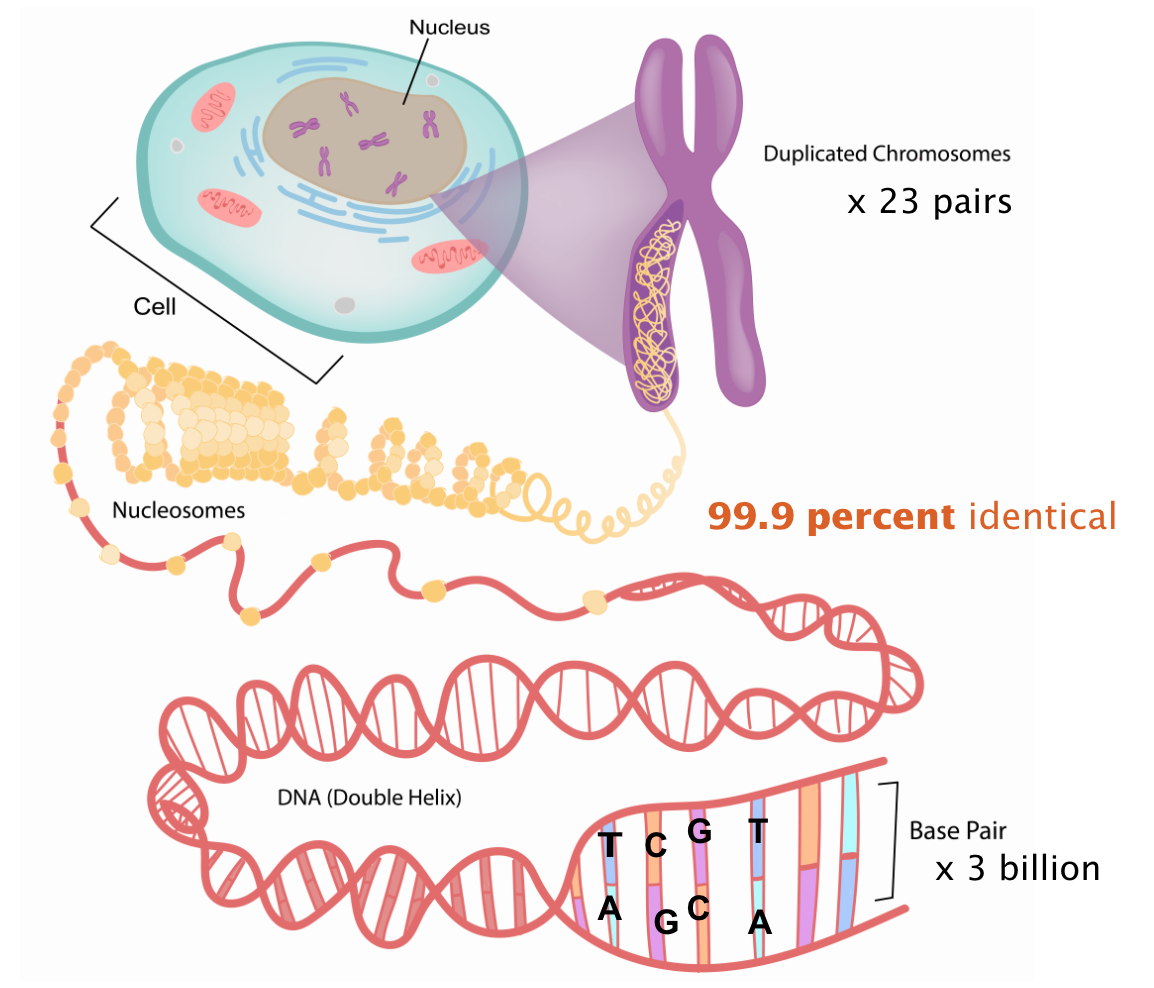
- Chromosome: a nucleic acid and protein structure that resembles a thread and carries genetic information in the form of genes; it is often found in the nucleus of most living cells. There are 23 chromosomes in the human body. There are 4 types of nucleotides: Adenine (A), Cytosine (C), Thymine (T), Guanine (G), in which A pairs with T, T pairs with A, C pairs with G, and G pairs with C
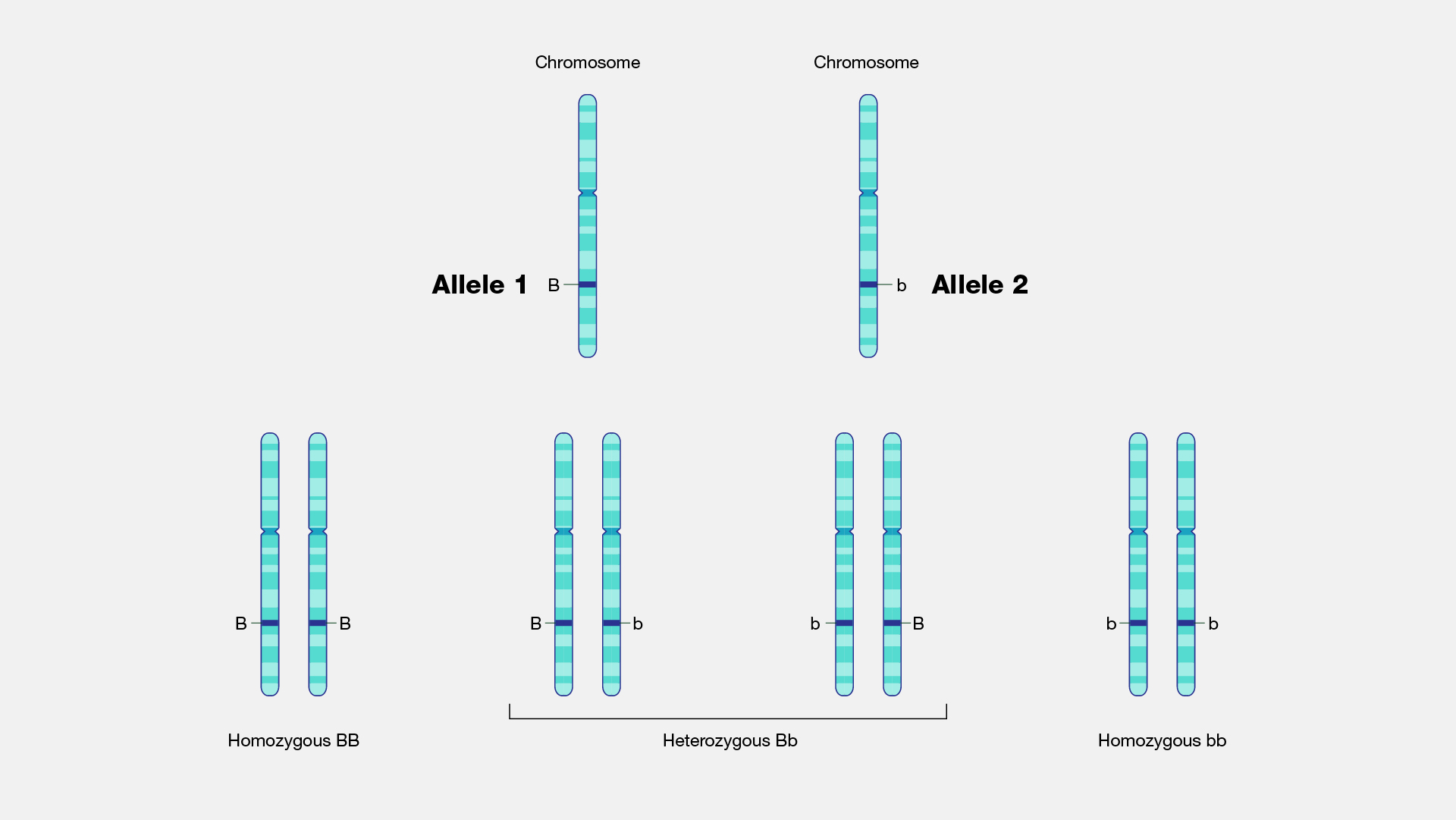
- Allele: one of the two or more alternate gene variants that can exist, which can be present in the same location on a chromosome.
- Single nucleotide polymorphism (SNP): a genetic variation in the DNA that occurs at a single base location. The influence of SNPs on attributes including health conditions, diseases, treatment responses is a topic of research for scientists. In genetics data, a SNP variable has 3 values: 0 = homozygous dominant alleles, 1 = heterozygous alleles (1 major and 1 minor), 2 = homozygous minor alleles
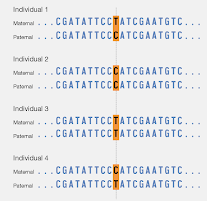
In the picture above, we have 4 individuals with most of their base pairs are the same, except from the ones highlighted in orange. Those orange-highlighted parts of the chromosomes that are different from one another are SNPs!
Minor allele frequency (MAF): refers to the lower allele frequency, and it might differ between populations.
Base pair position: the position of the allele on the chromosome